
7 signs of a hidden water leak (and how to check your meter)
Short answer. The most common signs of a hidden water leak are a higher bill with no change in use, the sound of running water, stains or warped floors, a musty crawlspace and a soggy patch of lawn. To confirm, turn off every fixture and read your water meter twice, two hours apart. Any movement means a leak.
Most household leaks are small and out of sight. The EPA's WaterSense program estimates that the average household's leaks waste more than 9,300 gallons of water a year, and that nine percent of homes have leaks of 50 gallons a day or more. Charlotte Water says a private plumbing leak is the leading cause of a high water bill.
What are the signs of a hidden water leak?
- A higher water bill with no change in use. Compare the same month last year. The EPA's rule of thumb is that a family of four using more than 12,000 gallons in a winter month could have a serious leak.
- A meter that moves when everything is off. This is the one sign that settles the question. The test is below.
- The sound of water when nothing is running. A hiss inside a wall, a trickle under the floor, or a toilet that refills by itself.
- Stains and surface damage. Brown rings on a ceiling, bubbling paint, swollen baseboards, or flooring that cups or lifts.
- A musty smell. Mold and mildew need moisture. A smell that will not go away usually means something is staying wet.
- A warm or damp spot on the floor. A warm patch can mean a hot water line is leaking beneath it.
- A soggy or extra-green strip of lawn. A wet line between the meter and the house in dry weather points to the buried service line.
How do I check for a leak with my water meter?
Your meter is usually in a covered box in the ground near the street. The test takes a few minutes of work and two hours of waiting.
- Turn off everything that uses water: faucets, dishwasher, washing machine, ice maker and irrigation. Ask everyone not to flush.
- Lift the lid of the meter box and wipe the meter face clean.
- Look for a leak indicator. Many meters have a small triangle or star-shaped wheel that turns with even a slight flow. If it is moving with everything off, water is going somewhere.
- Write down every digit of the reading, or take a photo.
- Use no water for two hours, then read the meter again. That is the interval the EPA recommends. If the reading changed at all, you probably have a leak.
- Find which side it is on. Close the main shutoff at the house and watch the meter again.
| All fixtures off | House shutoff closed | What it means |
|---|---|---|
| Meter still | Not needed | No leak on the pressurized pipes. Look at drains, the roof or groundwater. |
| Meter moving | Meter stops | The leak is inside the house: a toilet, a fixture, the water heater or a supply pipe. |
| Meter moving | Meter still moving | The leak is between the meter and the house, usually the buried service line or an irrigation line that branches off before the valve. |
Toilets are a common culprit, so test them next. Put a few drops of food coloring in each tank and wait 10 minutes without flushing. Color in the bowl means the tank is leaking into it, usually past a worn flapper. Flush afterward so the dye does not stain.
One limit to know: the meter only sees pressurized water. A leaking drain pipe will never move it, because drains carry water only when a fixture is in use. Finding those takes a look under the house or a sewer camera inspection.
Where do leaks hide in a crawlspace home?
Many Charlotte-area homes sit on crawlspaces, and a leak there can run for months before anything shows upstairs. With a good flashlight, look for wet or sagging insulation, dark stains on joists and subfloor, puddles on the vapor barrier, and white or green crust on fittings. Check these spots first:
- Where the water line comes through the foundation wall, including the main shutoff and the pressure-reducing valve
- Under bathrooms, at tub and shower drains and around toilet connections
- Under the kitchen, at the sink drain and the lines to the dishwasher and ice maker
- Around the water heater, if it sits in or above the crawlspace
- Along outside walls, at the pipes feeding hose bibs
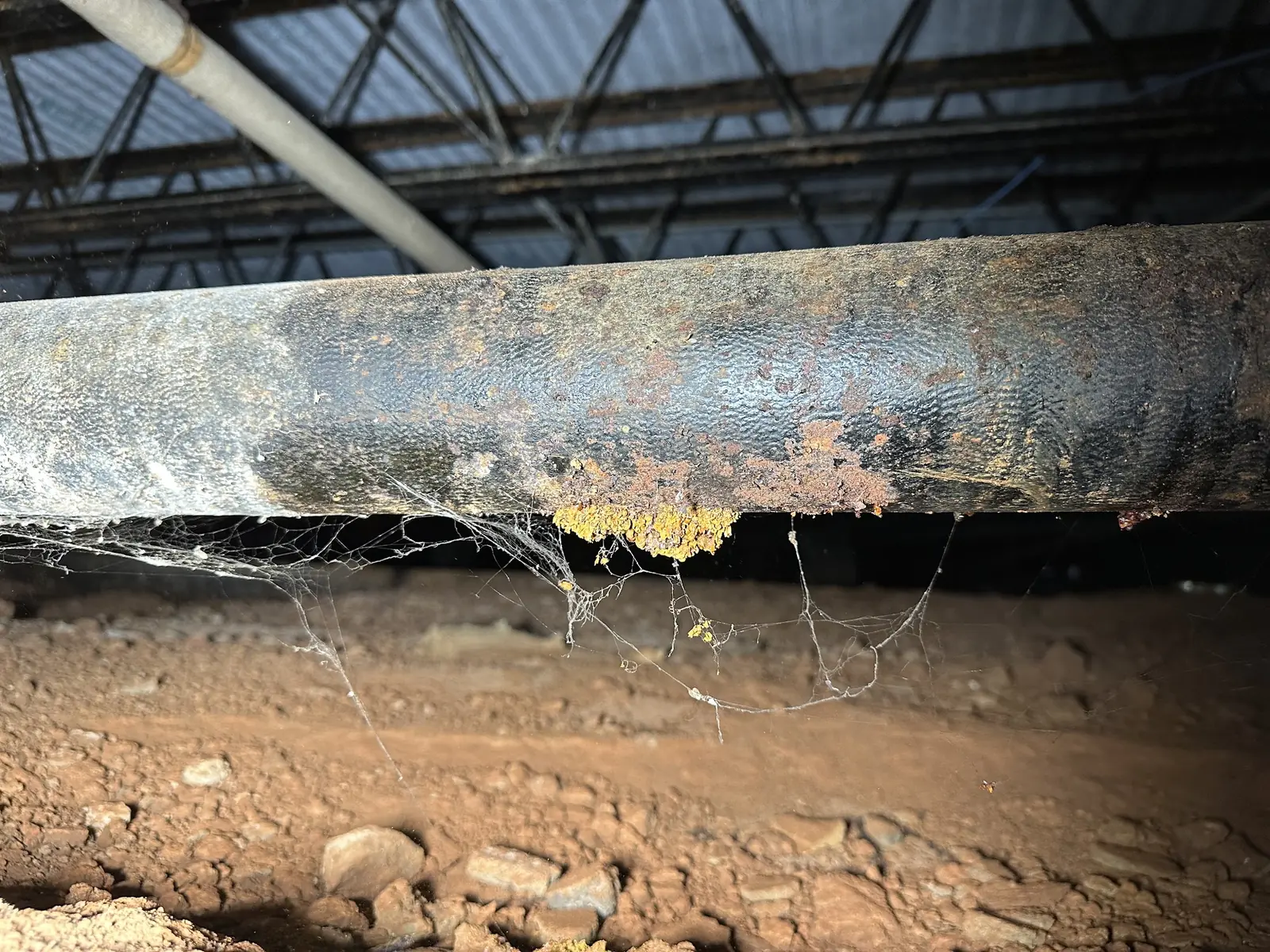
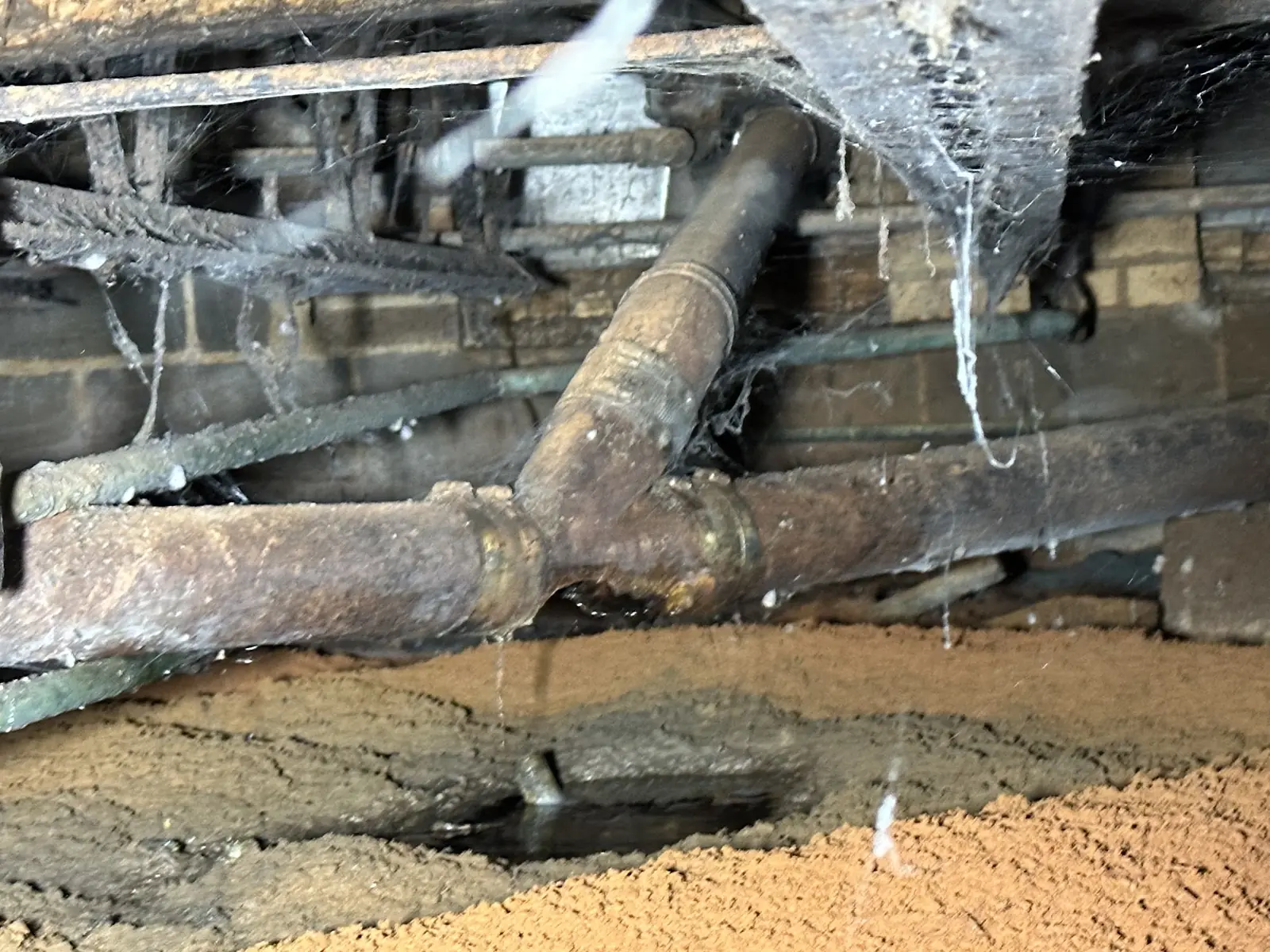
- At cast iron drain fittings, which rust through from the inside in older homes
The photo at the top of this page is a corroded drain pipe in a crawlspace. A leak like that drips only when someone runs water upstairs, which is why it goes unnoticed. If standing water is near wiring, or you smell sewage, stay out and call a plumber.
When is a hidden leak an emergency?
Shut off the main and call right away if you see any of these:
- Water spraying, running or coming through a ceiling
- A meter dial spinning fast with everything off
- Water near outlets, a light fixture or the electrical panel
- A sudden drop in water pressure across the whole house, which Charlotte Water notes can mean a broken water line
- Sewage in the crawlspace or backing up into a fixture
A slow drip can wait for a scheduled visit, but not for long. The EPA's guidance is to dry wet materials within 24 to 48 hours to keep mold from growing, and a leak that keeps dripping never gives them the chance. Slow leaks also rot framing, and they can turn into fast ones.
What should I do after I confirm a leak?
- Fix what you can. A toilet flapper or a dripping faucet is a small job, and a plumbing repair visit covers it if you would prefer not to. The EPA says fixing easily corrected household leaks can save about 10 percent on a water bill.
- Close the valve to whatever is leaking, or the main if you cannot isolate it, until it is repaired.
- Write down your meter readings and take photos. Charlotte Water says it has resources to help with an outstanding balance after a private leak is repaired, so call 311 or 704-336-7600 and ask what they need from you.
- Call a plumber for anything you cannot see or reach.
Alpha Drain finds and repairs hidden leaks for homes and businesses around Charlotte. We narrow it down with meter and pressure testing, go into the crawlspace, and use a camera when the leak is on the drain side. Repairs carry a 1-year labor warranty, and you hear the price first. Start with leak detection or send us a message. If water is running now, call (980) 408-1705. We are open 24/7 as an emergency plumber.
More questions
More than most people expect. The EPA estimates that a faucet dripping once per second wastes more than 3,000 gallons a year, and that an irrigation leak about the thickness of a dime can waste around 6,300 gallons a month.
Charlotte Water does not repair private plumbing. If your bill is high and you cannot find a leak, you can call 311 or 704-336-7600 and request a high bill investigation. A leak inside the house, or between the meter and the house, is the owner's to repair, and that takes a plumber.
Yes. In a slab home, water lines can run under or through the concrete. The signs are a warm spot on the floor, the sound of water with nothing running, damp flooring and a meter that moves with every fixture off. The meter test works the same way.
By narrowing it down before opening anything. We confirm the leak at the meter, shut off sections of the system in turn, inspect the crawlspace and fixtures, and run a camera through drain lines when the leak is on the waste side. By the time a wall or floor is opened, we already know the area to look in.
Related services
Written by the Alpha Drain team in Charlotte, NC. Alpha Drain is a licensed and insured plumbing company run by Spyro Vassiliou, a plumber with 15 years of experience. This article is general information, not a substitute for an on-site diagnosis.
Plumbing in Charlotte, backed in writing
1-Year LaborWarranty
Covers labor on repairs and installations. Drain cleaning is excluded.

Get Your Plumbing Fixed In Just Three Easy Steps
An Easy Call
Call, text, or send the quote form. Tell us what is happening and we will tell you when we can be there, often the same day.
Step 1Choose Your Fix
We find the cause, show you what we see, and walk you through your options and the price before any work starts.
Step 2Problem Solved
We do the repair, test it, clean up, and file any paperwork. Labor on repairs and installations is covered for a year.
Step 3
Ready To Get Your Plumbing Fixed?
Open 24 hours. Licensed & insured. 1-year labor warranty.