
Reverse osmosis vs. whole-house filter: which do you need?
Short answer. Choose reverse osmosis if you want cleaner drinking and cooking water at one tap. It is the more thorough filter, but it treats only that faucet. Choose a whole-house filter if chlorine taste, odor or sediment bothers you at every tap and shower. They do different jobs, and some homes use both.
What is the difference between reverse osmosis and a whole-house filter?
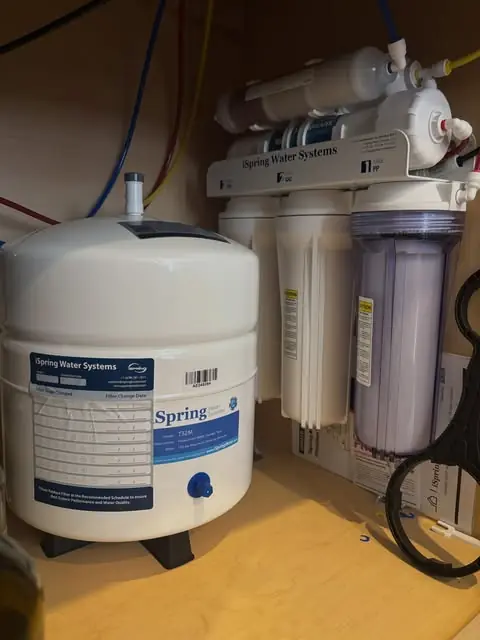
They are built for different jobs. A reverse osmosis system, or RO, is a point-of-use filter. It sits under one sink, usually in the kitchen, and feeds a small dedicated tap. A whole-house filter is a point-of-entry filter. It is installed where the water line enters the house, so every faucet, shower and appliance gets treated water.
Put simply, RO does a deep clean on a few gallons a day. A whole-house filter does a lighter clean on every gallon you use.
| Compare | Reverse osmosis | Whole-house filter |
|---|---|---|
| Where it goes | Under one sink, with its own tap | On the main line where water enters the house |
| What gets treated | Drinking and cooking water at that tap | Every faucet, shower and appliance |
| How it works | Sediment and carbon stages, then a fine membrane | Usually sediment and carbon filters |
| Typical strengths | Dissolved solids and a wide range of contaminants, depending on the model | Chlorine taste and odor, sediment |
| Typical limits | One tap only, sends some water to the drain | Does not match RO for dissolved contaminants |
| Upkeep | Pre-filters and membrane on a schedule | Cartridges or media on a schedule |
What does reverse osmosis remove, and what does it leave?
Pressure pushes water through a membrane with extremely fine pores. Treated water goes to a small storage tank and the rejected water goes down the drain. The CDC says reverse osmosis filters remove germs and some chemicals, including lead, copper, chromium, chloride and sodium, and may reduce others such as arsenic, fluoride and nitrate. The EPA lists lead, PFAS and volatile organic compounds among the contaminants these systems can potentially remove.
Three caveats keep that honest:
- Performance depends on the model. Look for certification to NSF/ANSI 58, the standard for point-of-use RO systems, and read which contaminants that model is certified to reduce. NSF itself points out that certification does not mean a product reduces everything.
- It sends water to the drain. The EPA says a typical point-of-use RO system sends five gallons or more down the drain for each gallon it treats. Models with the WaterSense label send 2.3 gallons or less.
- It takes out some things you may want. RO can reduce the fluoride your utility adds for dental health, along with minerals that give water its taste.
What does a whole-house filter remove, and what does it miss?
Most whole-house systems use a sediment filter, a carbon filter or both. Sediment filters catch grit and rust particles. Carbon is what improves taste and smell, and the CDC notes that some whole-home filters remove water treatment chemicals such as chlorine. That is the appeal: showers, laundry and every tap, not only the kitchen.
What it misses depends on the model. A basic carbon filter is not built to take out dissolved minerals, and it is not a substitute for RO at the drinking tap. Check the certification before you buy:
- NSF/ANSI 42 covers aesthetic effects such as chlorine, taste and odor.
- NSF/ANSI 53 covers contaminants with health effects, such as lead. A filter is certified only for the specific contaminants listed for it.
- NSF/ANSI 401 covers a list of emerging compounds.
A whole-house filter is also not a water softener. Softeners are separate equipment for hard water.
What does Charlotte's water quality report say?
Start here before you buy anything. Every water utility publishes an annual water quality report, also called a Consumer Confidence Report. Charlotte Water's 2025 report says:
- The water comes from Mountain Island Lake and Lake Norman, and the utility received zero drinking water violations for the year.
- Chlorine is added to control bacteria. The average level in the system was 1.04 parts per million, against a limit of 4.
- Fluoride is added for dental health and averaged 0.65 parts per million.
- Total hardness averaged 32 parts per million, which the U.S. Geological Survey classes as soft. Total dissolved solids averaged 59 parts per million.
- Lead in drinking water comes mainly from service lines and home plumbing. The report notes that a filter certified by an accredited certifier can reduce it.
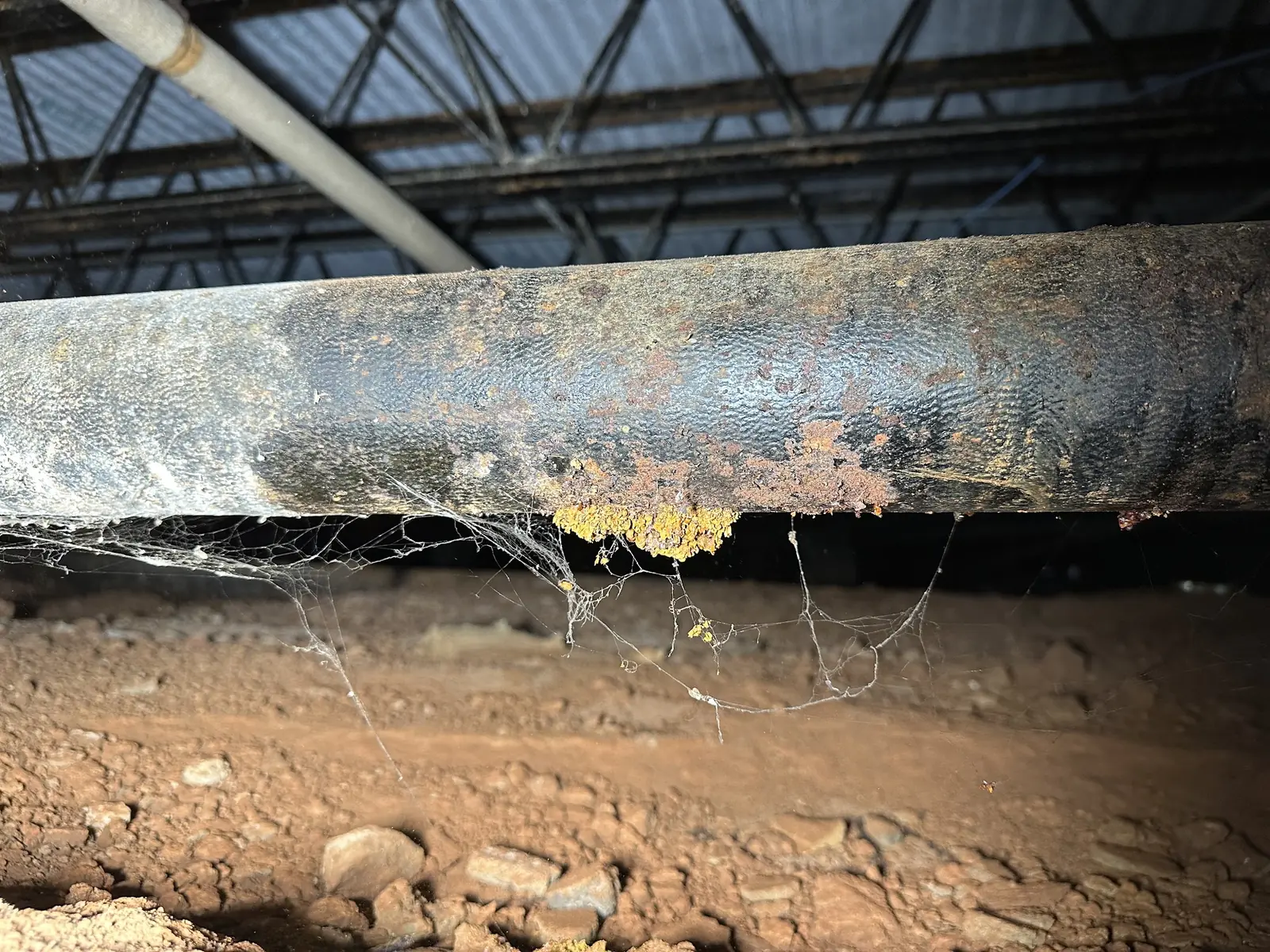
Two practical points follow. Because the water is already soft, most homes on Charlotte Water do not need a softener. And because lead comes from the plumbing between the street and your glass, the age of your own pipes matters. A plumbing inspection tells you what they are made of. If you are on a private well, none of these numbers apply, and you should have the water tested by a certified lab.
How much maintenance does each system need?
Both need regular attention, and both stop working well when it is skipped. The CDC's advice applies to any filter: change it on the manufacturer's schedule so it keeps working and germs do not grow in it.
- Reverse osmosis. Pre-filters are commonly changed every 6 to 12 months and the membrane every few years, depending on the system and how much water you use.
- Whole-house filter. Cartridges or filter media are replaced on the manufacturer's schedule. An overdue cartridge can show up as lower water pressure at every fixture.
Installation matters as much as the filter. An RO system needs a proper feed valve, a correct drain connection and room to change filters. A whole-house system should have shutoff valves and a bypass so the house still has water during service. A fitting that drips into the cabinet is a plumbing repair worth making before it ruins the cabinet floor.
Which one should you choose?
- Choose reverse osmosis if you want the most thorough treatment of drinking and cooking water for the least money, you buy bottled water every week, or you have a specific concern such as lead from older plumbing.
- Choose a whole-house filter if chlorine taste or smell bothers you in the shower as well as the kitchen, or you see sediment at several fixtures.
- Choose both if you want every tap improved and the most thorough treatment where you drink.
- Choose neither if you like your water and your utility's report is clean. Filtration is a preference, not a requirement.
Alpha Drain installs under-sink reverse osmosis systems and whole-home filters in Charlotte, plumbed with proper valves and covered by a 1-year labor warranty. If you ask what a system will and will not do, you get a straight answer. See water filtration, call (980) 408-1705 or send a message to talk through your options.
More questions
Charlotte Water's 2025 report shows zero drinking water violations, and the utility says it routinely monitors for more than 150 contaminants. Filtration is a personal choice for taste, for specific substances or because of older plumbing in the home. The report advises people with weakened immune systems to ask their health care provider about drinking water.
It can. The EPA lists PFAS among the contaminants RO systems can potentially remove, and NSF says treatment devices certified to NSF/ANSI 53 or NSF/ANSI 58 are an effective way to limit exposure. Check that the exact model carries a PFAS reduction claim. For what has been detected locally, read the unregulated contaminants section of Charlotte Water's report.
In most kitchens, yes, as long as a line can be run from the RO system to the refrigerator. Ask about it before the install so the tubing route is planned.
Many systems are sold as kits. The weak points are the connections: the feed valve on the cold line, the drain connection and tubing that kinks behind stored items. A leak under the sink can go unnoticed for weeks. Alpha Drain installs reverse osmosis systems with proper valves and shows you how to change the filters.
Related services
Written by the Alpha Drain team in Charlotte, NC. Alpha Drain is a licensed and insured plumbing company run by Spyro Vassiliou, a plumber with 15 years of experience. This article is general information, not a substitute for an on-site diagnosis.
Plumbing in Charlotte, backed in writing
1-Year LaborWarranty
Covers labor on repairs and installations. Drain cleaning is excluded.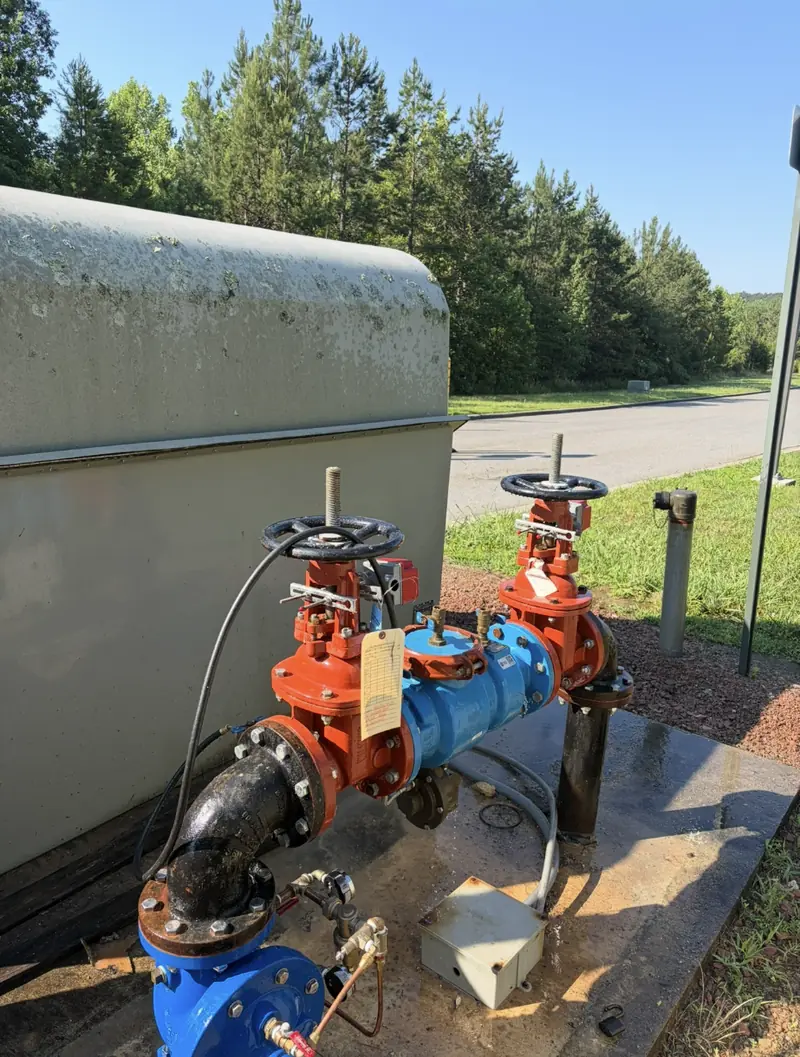
Get Your Plumbing Fixed In Just Three Easy Steps
An Easy Call
Call, text, or send the quote form. Tell us what is happening and we will tell you when we can be there, often the same day.
Step 1Choose Your Fix
We find the cause, show you what we see, and walk you through your options and the price before any work starts.
Step 2Problem Solved
We do the repair, test it, clean up, and file any paperwork. Labor on repairs and installations is covered for a year.
Step 3
Ready To Get Your Plumbing Fixed?
Open 24 hours. Licensed & insured. 1-year labor warranty.