
Why is my water heater making a popping noise?
Short answer. A popping or rumbling water heater is usually caused by sediment. Minerals settle on the bottom of the tank, water gets trapped under the layer, and it pops as it heats. The noise alone is rarely an emergency, but the tank needs a flush. Hissing, sizzling or a leak is different: turn the heater off and call a plumber.
What causes the popping sound in a water heater?
Tap water carries dissolved minerals and fine grit. Inside a tank water heater they drop out of the water and settle on the bottom, directly over the gas burner or around the lower electric element. Year after year the layer gets thicker and harder.
When the heater fires, a little water is trapped under that layer. It heats faster than the water above it, turns to steam and pushes up through the sediment. Each bubble that breaks through makes a pop. A thick layer makes a low rumble. Rheem's guide to water heater noises names sediment buildup as the most common cause of popping and rumbling in tank-style heaters.
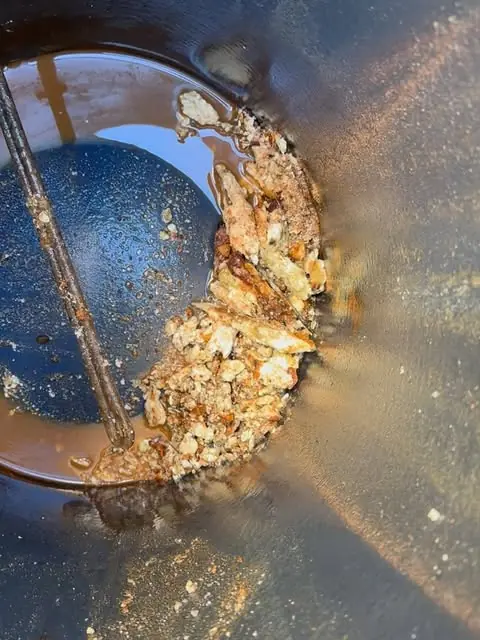
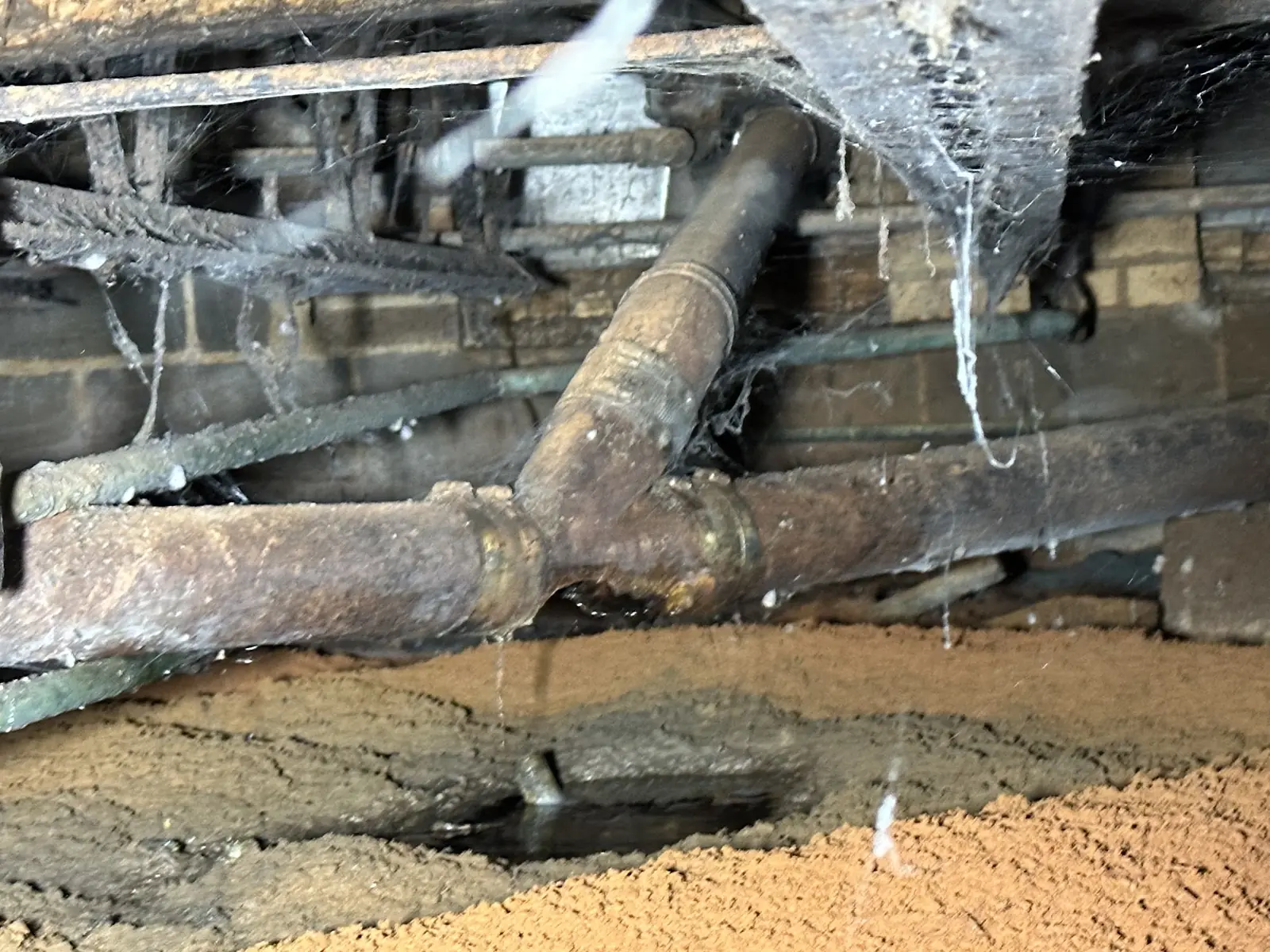
Charlotte's water is soft by national standards, which slows the buildup down. It does not stop it. A tank that has gone eight or ten years without a flush can still hold a heavy layer, and the photo at the top of this page shows what that looks like from the inside.
Is a popping water heater dangerous?
Popping from sediment is a maintenance warning, not an emergency by itself. Leaving it alone still costs you:
- The sediment sits between the heat and the water, so the heater runs longer to do the same job.
- On a gas heater the tank bottom runs hotter under the layer, which is hard on the steel and its lining.
- On an electric heater, sediment can bury the lower element and burn it out.
- The layer takes up room, so each tank gives you less hot water.
Some signs are different and call for action right away. Rheem's guidance is that hissing or sizzling can point to an active leak or a failing part, and that the safest move is to turn the unit off and call a professional. Treat all of these the same way:
- Hissing or sizzling, especially with water at the base of the tank
- Water dripping or running from the temperature and pressure relief valve or its discharge pipe
- Moisture on the outside of the tank that comes back within a few hours of wiping it dry
- Any smell of gas. Leave the house first, then call 911 or your gas utility from outside
Never cap, plug or tie down a relief valve that is dripping. It is the safety device that lets water out if the temperature or pressure in the tank climbs too high. If it is discharging, switch the heater off and call a plumber.
What do other water heater noises mean?
Not every sound is sediment. This table follows Rheem's published guide to water heater noises.
| Sound | Likely cause | What to do |
|---|---|---|
| Popping or rumbling | Sediment on the bottom of the tank | Flush the tank |
| Ticking or clicking | Heat traps, or pipes expanding as they warm up | Usually normal |
| Humming | Electric heating elements at work | Usually normal |
| Whistling or screeching | Restricted water flow or a pressure problem | Have it checked soon |
| Hissing or sizzling | Possible leak or failing part | Turn the heater off and call a plumber |
| Banging or hammering | Water hammer in the house piping, not the heater itself | Have the piping checked |
How does flushing a water heater work?
A flush drains the tank through the valve at the bottom and uses fresh cold water to stir up the sediment and carry it out. Rheem calls annual flushing one of the most effective forms of water heater maintenance. Read your owner's manual first, since the steps vary by model. The usual sequence looks like this:
- Turn off the power at the breaker for an electric heater. For a gas heater, turn the gas off the way your manual directs.
- Close the cold water valve above the tank, then open a hot faucet somewhere in the house so air can get in.
- Connect a garden hose to the drain valve and run it to a floor drain or outdoors. The water is hot enough to scald, so keep children and pets away from the far end.
- Open the drain valve and let the tank empty.
- Open the cold water valve again and let it rinse the bottom of the tank until the water from the hose runs clear.
- Close the drain valve, let the tank fill completely, and wait until the open hot faucet runs without sputtering.
- Only then turn the power or gas back on. An electric element that is switched on in an empty tank burns out quickly.
Two honest cautions. On an old heater that has never been flushed, the drain valve can clog with sediment partway through or fail to seal afterward, and a hardened layer may not come out with a simple drain. Rheem notes that heavy buildup calls for a professional's tools and a more thorough cleaning. That usually means a pump and hoses that push water through the tank to break the layer up. And if you are not comfortable around gas controls or a 240-volt circuit, hand the job off. Alpha Drain flushes tank water heaters for homes and businesses across Charlotte.
When does the noise mean it is time to replace the heater?
A flush quiets most popping heaters. Rheem lists two warning signs that point past maintenance: noise that continues after the tank has been flushed, and a unit that is 8 to 12 or more years old. Add any of the following and replacement is usually the better use of your money:
- Water at the base of the tank. A. O. Smith's guidance is direct on this one: a leak from the bottom means corrosion has gone through the steel, and a corroded tank cannot be repaired.
- Rust in the hot water but not the cold.
- A costly part has failed on a heater that is already near the end of its expected life.
The manufacture date is on the rating label, usually coded into the serial number. If you are buying a house with an older, noisy heater, a plumbing inspection will tell you what shape it is in before you close. And if a tank lets go at night, shut off its cold water valve and call an emergency plumber.
Do tankless water heaters need flushing too?
Yes, but the problem and the method are different. A tankless heater does not store water, so there is no bed of sediment to pop. Scale forms inside the narrow passages of the heat exchanger instead. Navien, a tankless manufacturer, describes the result as lower efficiency and reduced flow.
The fix is descaling. The heater is closed off from the house with its service valves, and a small pump circulates a descaling solution from a bucket through the heat exchanger and back. Navien's published procedure calls for at least 45 minutes of circulation and then a fresh-water rinse of at least 10 minutes. Rinnai and Navien both say to do it at least once a year.
Manufacturers differ on what to circulate. Rinnai specifies undiluted white vinegar and warns against chemical cleaners. Navien allows an approved descaling solution or white vinegar, and recommends having a professional do the work because a mistake can damage the heater and affect the warranty. Follow the manual for your model.
Alpha Drain flushes tank water heaters and descales tankless units. Spyro has 15 years in the trade, and you hear plainly whether a repair is worth it before any work starts. Call (980) 408-1705 or send us a message.
More questions
No. Charlotte Water's 2025 water quality report lists total hardness at an average of 32 parts per million, which is under 2 grains per gallon. The U.S. Geological Survey classes water from 0 to 60 parts per million as soft. Sediment still collects in a tank over the years, only more slowly than it does in hard-water regions.
Look at the rating label on the side of the tank. It lists the model and serial number, and the manufacture date is usually coded into the serial number. The format varies by brand, so check the manufacturer's website if the date is not obvious.
Many homeowners do it. The risks are scalding water, the gas or electrical controls, and an old drain valve that will not close again. If the heater is more than ten years old and has never been flushed, or any step makes you unsure, have a plumber do it. Alpha Drain handles this as part of water heater service.
Related services
Written by the Alpha Drain team in Charlotte, NC. Alpha Drain is a licensed and insured plumbing company run by Spyro Vassiliou, a plumber with 15 years of experience. This article is general information, not a substitute for an on-site diagnosis.
Plumbing in Charlotte, backed in writing
1-Year LaborWarranty
Covers labor on repairs and installations. Drain cleaning is excluded.
Get Your Plumbing Fixed In Just Three Easy Steps
An Easy Call
Call, text, or send the quote form. Tell us what is happening and we will tell you when we can be there, often the same day.
Step 1Choose Your Fix
We find the cause, show you what we see, and walk you through your options and the price before any work starts.
Step 2Problem Solved
We do the repair, test it, clean up, and file any paperwork. Labor on repairs and installations is covered for a year.
Step 3
Ready To Get Your Plumbing Fixed?
Open 24 hours. Licensed & insured. 1-year labor warranty.