
What to do in a plumbing emergency before the plumber arrives
Short answer. In any plumbing emergency, stop the water first: close the valve at the fixture or the main shutoff for the house. Keep away from electricity near water, and switch off the breaker only from dry footing. Stop using drains during a sewage backup. Then call a 24-hour plumber and start containing the water.
What should I do first in any plumbing emergency?
Three moves cover almost every situation, in this order:
- Stop the water. Close the valve at the fixture if the problem is one toilet, sink or water heater. If you cannot find that valve, or the leak is in a pipe, close the main shutoff for the house.
- Stay clear of electricity. If water is near outlets, cords, appliances or a ceiling light, switch off power to that area at the breaker. Do it only if you can reach the panel on dry footing. If you would have to stand in water, stay out and call for help.
- Call, then contain. Phone a plumber, then move rugs and furniture, set out buckets and towels, and take photos for your insurer.
If you smell gas at any point, do not look for the source. Leave the house, then call 911 or your gas utility from outside.
Where is the main water shutoff, and how do I turn it off?
Find it today, before you need it. Charlotte Water describes the master shutoff as a valve on the house side of the meter, inside the building, typically where the plumbing enters. Where that is depends on the foundation:
| Type of home | Where to look |
|---|---|
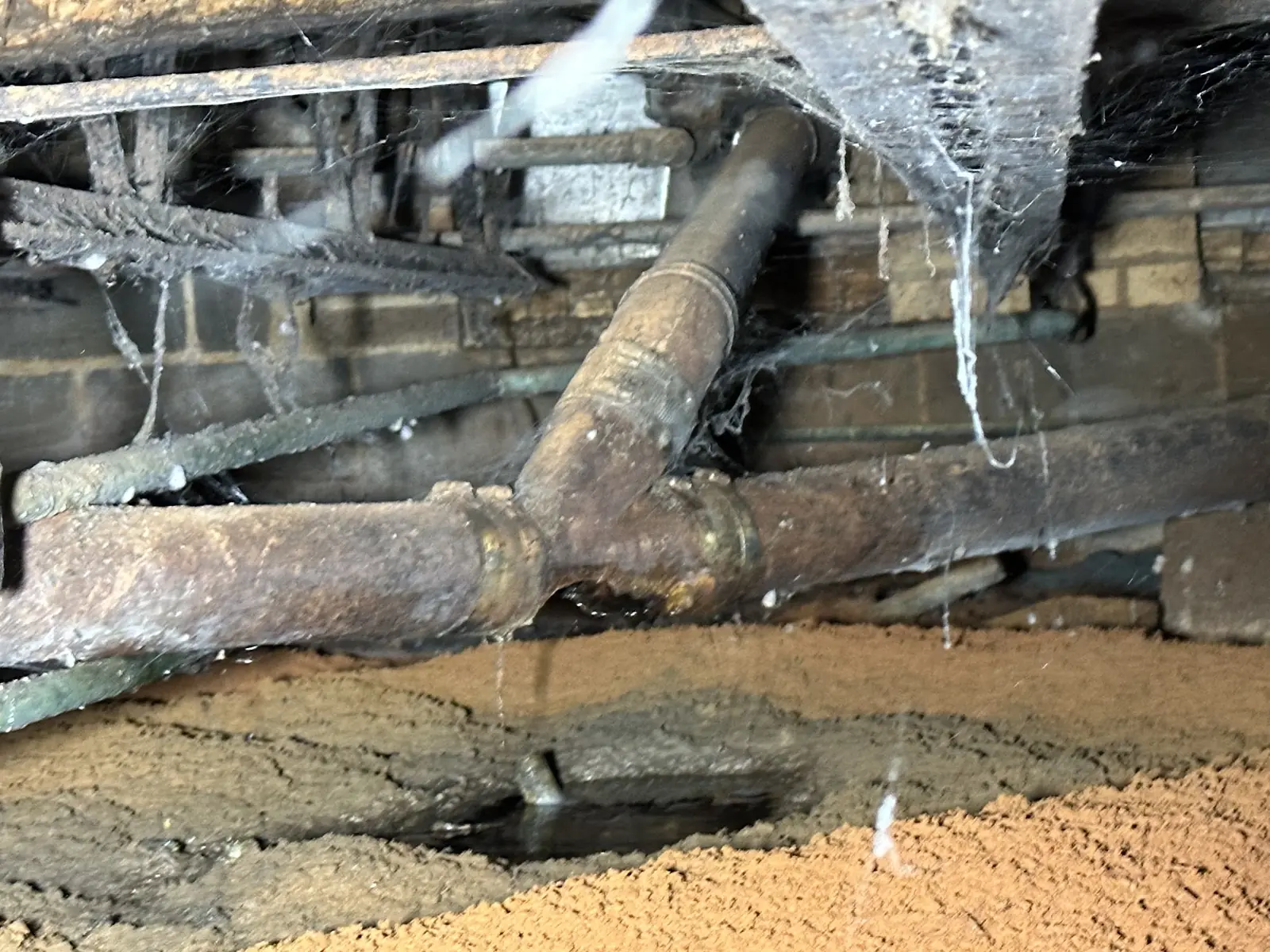
| Crawlspace | Inside the crawlspace near the front foundation wall, on the side closest to the street |
| Basement | Near the front wall of the basement |
| Slab | Near the water heater or inside the garage |
Many Charlotte-area homes sit on crawlspaces, and that puts the valve in the worst possible place at 2 a.m. Some houses have a second valve where the line comes up into a closet, garage or laundry room, so check there first. If yours is only in the crawlspace, learn the route to it in daylight, keep a flashlight by the access door, and think about having a plumber add a shutoff inside the living space.
There are two common valve types:
- Gate valve. A round wheel handle. Turn it clockwise until it stops. Older ones can be stiff, so do not force it past snug.
- Ball valve. A straight lever. Turn it a quarter turn so the lever sits crosswise to the pipe.
If you cannot find or turn your valve and Charlotte Water is your provider, call 311 or 704-336-7600 at any hour and ask for an emergency shut-off at the meter.
What do I do when a pipe bursts?
- Close the main shutoff.
- Switch off power to any wet area, following the rule above.
- Open a faucet on the lowest floor to drain what is left in the lines.
- Stay out from under a ceiling that is sagging or dripping.
- Photograph the damage, then start drying. The EPA's guidance is that wet materials dried within 24 to 48 hours usually will not grow mold.
- Call a plumber. If you rent, call your landlord or property manager too.
Leave the water off until the pipe is fixed. Ask the plumber to check the rest of that pipe run while the plumbing repair is open.
What do I do when sewage backs up into the house?
- Stop using water everywhere in the house. No flushing, no sinks, no showers. Turn off the dishwasher and washing machine.
- Watch what happens next. Charlotte Water's guidance is that if the backup stops once your water is off, you need a plumber, since the blockage is probably in your own plumbing. If sewage keeps coming with nothing running, call Charlotte Water at 311 or 704-336-7600. The blockage may be in the public sewer, which is theirs to clear.
- Keep children and pets away. Do not touch sewage with bare hands. Wear rubber gloves and boots, and wash up afterward.
- Turn off power to the area if wastewater is near outlets or appliances, and only from a dry spot.
- Skip chemical drain openers. They rarely clear a main line, and they leave caustic water in the pipe.
- Do not run the central heat or air if wastewater reached floor vents or ducts.
Carpet, pad and upholstered furniture that soaked up sewage generally have to be thrown out. Public health guidance favors a professional cleanup crew when sewage has sat in a finished room for more than 24 hours or has reached the ductwork. The cause is most often a clogged main line. A plumber clears it with drain cleaning equipment, and a sewer camera inspection shows why it happened.
What do I do when a toilet is overflowing?
- Lift the tank lid and push the rubber flapper at the bottom of the tank down over its opening. That stops water from entering the bowl.
- Close the supply valve on the wall behind the toilet by turning it clockwise.
- If that valve is stuck, lift the float in the tank to stop the fill and have someone close the main.
- Do not flush again. Once the water level drops, try a plunger.
- If water comes up in the tub or shower, or other drains are slow at the same time, the clog is in the main line. Treat it as a sewage backup.
What do I do when the water heater is leaking?
- Close the cold water valve on the pipe that enters the top of the heater. If there is no valve or it will not close, use the main shutoff.
- Cut the energy. For an electric heater, switch off its breaker. For a gas heater, turn the control knob on the gas valve to off, or close the gas shutoff on the supply pipe so its handle sits crosswise to the pipe.
- Do not touch an electric heater or its wiring while you are standing in water.
- If water is spraying or you hear hissing, shut everything down and keep back. The water inside is hot enough to scald.
- If the tank itself is leaking, it will keep draining until it is empty. A hose on the drain valve, run to a floor drain or outdoors, sends that water where you want it.
A. O. Smith's guidance is that a leak from the bottom of the tank means the steel has corroded through, and that cannot be repaired. A leak at a valve or fitting often can. A plumber who works on water heaters can tell you which one you have.
Alpha Drain is open 24 hours a day for homes and businesses around Charlotte. Call (980) 408-1705 and we will talk you through the shutoff while we are on the way. There is more on how that works on our emergency plumber page.
More questions
It depends on where the water is. A leak inside the house, or between the meter and the house, is private plumbing and a plumber's job. Water coming up in the street or at the meter box, or a sewer backup that continues with all of your water off, belongs to Charlotte Water. Their line is 311 or 704-336-7600, and it is answered 24 hours a day for emergencies.
Yes, if the water will be off for more than a short time or you have drained the pipes. Switch an electric heater off at the breaker and set a gas heater to its pilot or vacation setting. A heater that fires without a full tank can be damaged. Turn it back on only after the water is restored and the tank is full.
Policies differ, so call your insurer early. Take photos and video before you clean up, keep a list of anything you throw away, and save the plumber's invoice. Your insurer may also have a water damage company it works with.
A flashlight, a plunger, a bucket, old towels, rubber gloves and an adjustable wrench cover most first responses. Put a tag on your main shutoff so anyone in the house can find it, and save your plumber's number in your phone.
Related services
Written by the Alpha Drain team in Charlotte, NC. Alpha Drain is a licensed and insured plumbing company run by Spyro Vassiliou, a plumber with 15 years of experience. This article is general information, not a substitute for an on-site diagnosis.
Plumbing in Charlotte, backed in writing
1-Year LaborWarranty
Covers labor on repairs and installations. Drain cleaning is excluded.
Get Your Plumbing Fixed In Just Three Easy Steps
An Easy Call
Call, text, or send the quote form. Tell us what is happening and we will tell you when we can be there, often the same day.
Step 1Choose Your Fix
We find the cause, show you what we see, and walk you through your options and the price before any work starts.
Step 2Problem Solved
We do the repair, test it, clean up, and file any paperwork. Labor on repairs and installations is covered for a year.
Step 3
Ready To Get Your Plumbing Fixed?
Open 24 hours. Licensed & insured. 1-year labor warranty.